
Table of Contents
Definition
Mitochondria are rod-shaped organelles located in the cytoplasm of eukaryotic cells, including animal and plant cells. They are the powerhouse of the cell because they provide the energy required for all cellular activities in the form of ATP.
The mitochondria were first observed as small dots in muscles in 1800s by Albert von Kolliker. In 1890, Richard Altmann described them as “bioblasts” and proposed they were the basic units of life. However, their function was not fully understood until the mid-20th century, when its role in cellular respiration was uncovered.
The structure and composition of the mitochondria are unlike those of any other organelle, and that is for a profound reason we will discuss below.
Structure
The mitochondria are rod-shaped organelles that are 0.5-1.0 μm in diameter. A double membrane surrounds it, each with different properties. The outer membrane is smooth and relatively permeable, allowing some small molecules to pass through. The inner membrane, also called the cristae, creates folds that give a large surface area for cellular respiration.
The area between the two membranes, the intermembranous space, has a high concentration of H+ ions, essential for cellular respiration.
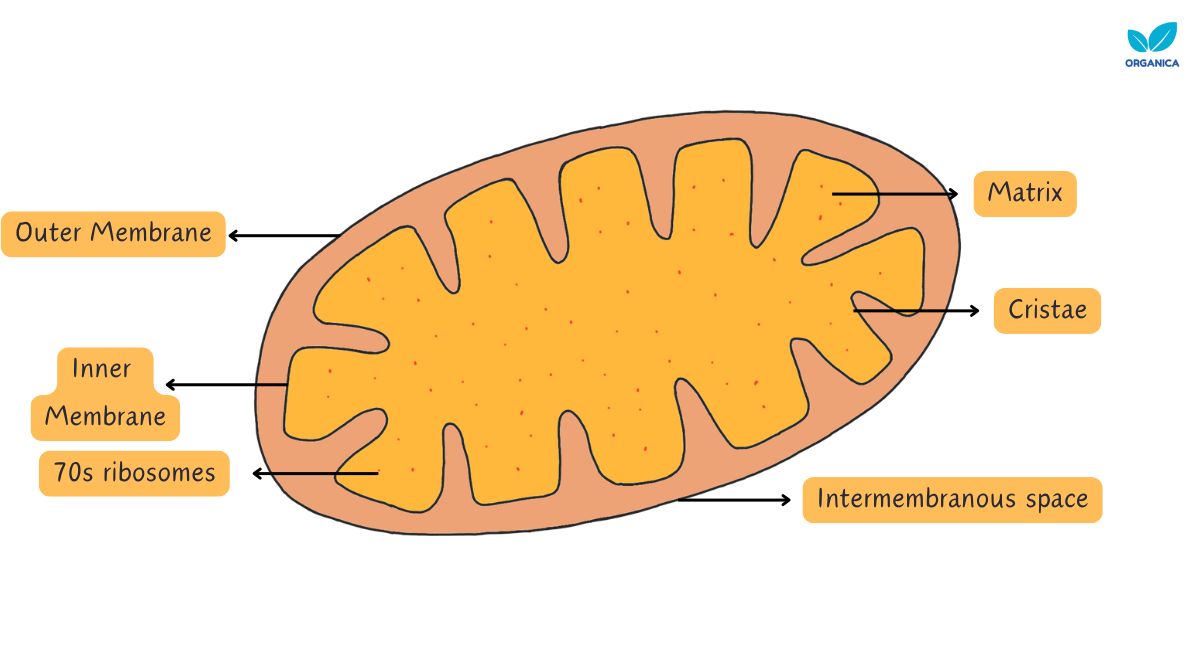
Surrounding the inner membrane is a gel-like substance called the matrix. It contains important enzymes, mitochondrial DNA, and 70s ribosomes.
The DNA of the mitochondria is inherited from the mother only, as the father’s sperm does not contain mitochondria, in addition to other organelles such as the endoplasmic reticulum and the Golgi apparatus.
Function
ATP synthesis:
The synthesis of ATP is the primary function of the mitochondria. The matrix contains special enzymes that are used during cellular respiration. It also allows glucose and fatty acids’ breakdown products to enter the Krebs cycle, releasing electrons to activate the electron transport chain.
Control cell death “Apoptosis”:
When the cell becomes damaged, the mitochondria release special proteins like cytochrome c from the area between the double membrane into the cytoplasm of the cell. These proteins signal to other enzymes called caspases, which break down the cell’s components.
Evolution
Mitochondria are believed to have evolved from free-living bacteria. Scientists suggest that they entered into a symbiotic relationship, also known as a mutually beneficial relationship, with eukaryotic cells 2 billion years ago. This ancient bacterium provided its host cell with extra energy through respiration, while the host cell offered protection and nutrients in return. Over time, bacteria became permanent residents of their host cells and eventually evolved into the modern mitochondria we know today.
The shared characteristics between bacteria and mitochondria are:
– Circular DNA
– Small 70s ribosomes
– Double membrane structure
Frequently Asked Questions:
Where are mitochondria found?
In the cytoplasm of eukaryotic cells, including plant and animal cells.
Why are the mitochondria known as the powerhouse of the cell?
Because it’s the “house” where most of the cell’s energy comes from, in the form of ATP. This ATP can then be used to power cellular processes such as muscle contraction and the synthesis of macromolecules.
What is the function of the mitochondria?
Breakdown energy-rich nutrients like glucose and fatty acids to produce ATP, the cell’s energy currency. The mitochondria also play a crucial role in apoptosis; they release special proteins like cytochrome c to coordinate the activation of caspase enzymes, which break down the cell’s components.
Are the mitochondria found in plant cell?
Yes, even though they produce their food and energy through photosynthesis, they still rely on cellular respiration and ATP synthesis, especially at night when there is no light.