
Table of Contents
Adenosine Triphosphate meaning
ATP stands for Adenosine Triphosphate and is known as the main energy currency of the cell in living organisms. ATP is present in every cell, from small to large animals. The source of ATP energy comes mainly from glucose for animals and sunlight for plants and other photosynthetic organisms.
Karl Lohmann made the first discovery of ATP in 1929. Later, Cyrus Fiske and Yellapragada Subbarow identified its function in cells and structure. The key breakthrough came in the 1940s when Fritz Lipmann proposed ATP as the universal energy carrier, a concept that transformed biochemistry.
ATP is a nucleotide like DNA and RNA, but instead of storing genetic information, it’s specialized in energy transfer.
ATP is made up of:
1. The base Adenine
2. Ribose Sugar
3. Three phosphate groups
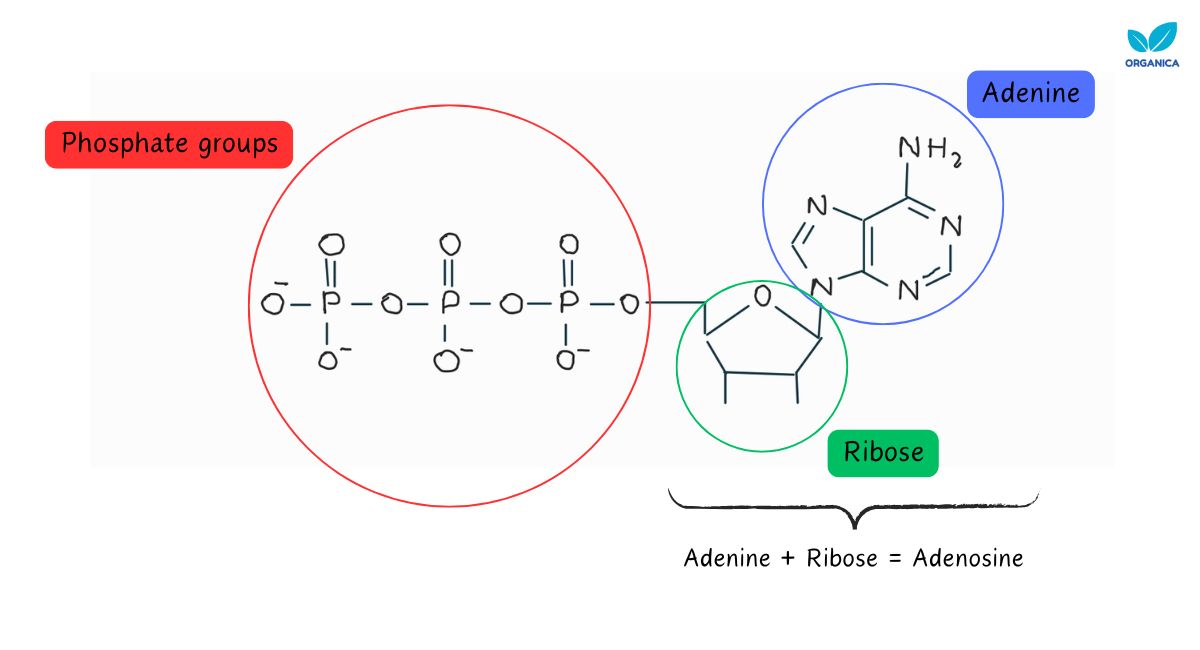
Covalent bonds between phosphate groups store significant energy, which is rapidly released when broken, sufficient to drive metabolic reactions within the body.
How is ATP made?
To produce ATP inside the cell, a set of reactions must convert the energy from digested nutrients or absorbed sunlight into a usable form that the cell can use. The breakdown of carbohydrates is often prioritized to produce ATP, as fats and proteins are used for structural and biochemical roles within the body.
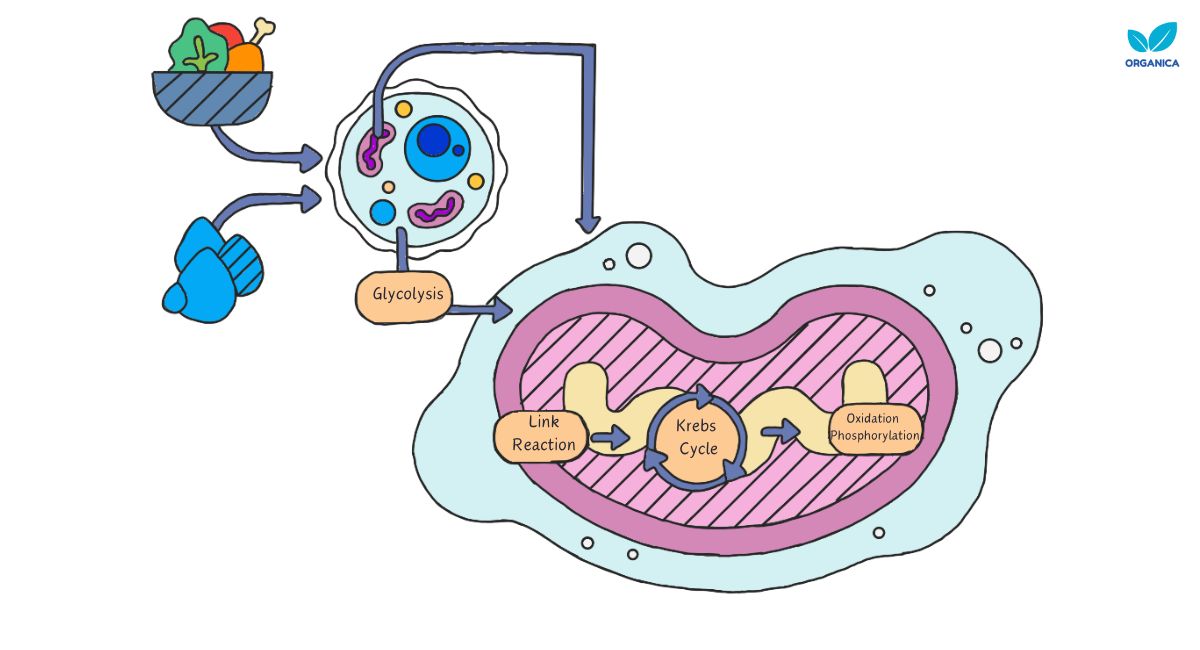
Cellular respiration, divided into aerobic and anaerobic respiration depending on the presence of oxygen, is the primary process for ATP synthesis in most organisms. In aerobic respiration, glucose is broken down to produce ATP, with carbon dioxide and water as by-products. This multi-step process includes Glycolysis, the link reaction (pyruvate oxidation), the Krebs cycle, and oxidative phosphorylation.
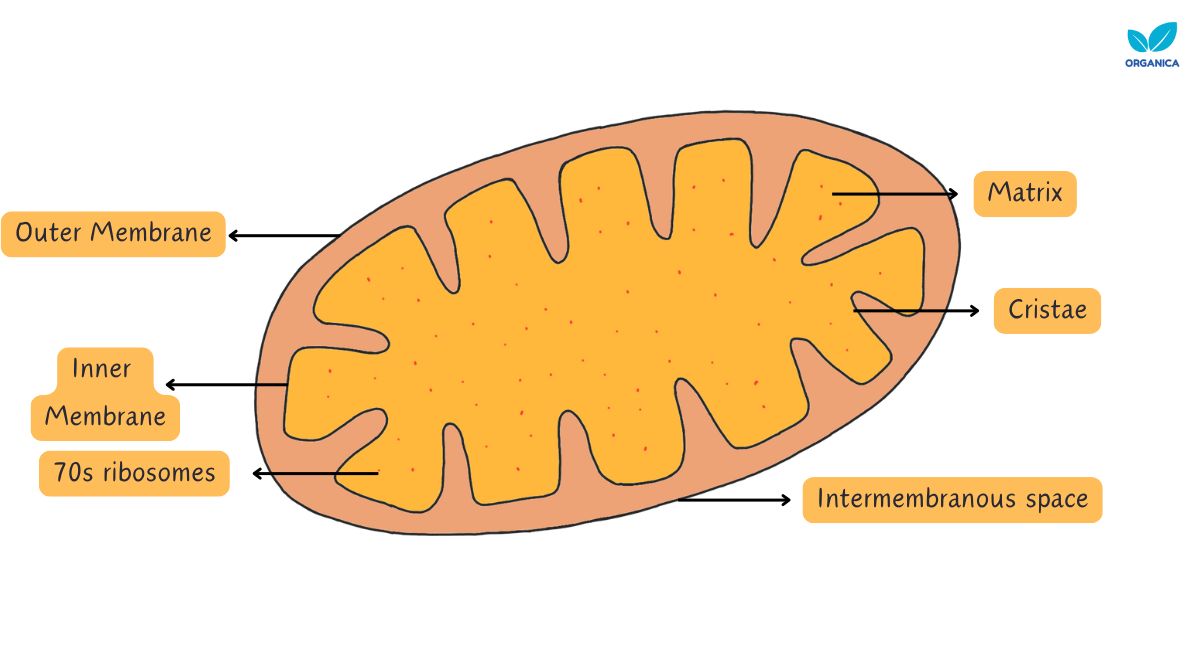
Glycolysis is the only process that takes place in the cytoplasm, while the other three occur in the mitochondria.
Glycolysis:
Glycolysis is the first step of cellular respiration and takes place in the cytoplasm. It’s a set of reactions that include the breakdown and oxidation of simple sugars (glucose), forming two molecules of pyruvate, ATP, and energy-containing NADH+H+. In the presence of oxygen, the final products now move to the next step, the link reaction.
Link Reaction (Pyruvate Oxidation):
As its name suggests, the link reaction “links” Glycolysis with the Krebs cycle. It takes place within the mitochondrial matrix. During this reaction, the two pyruvate molecules produced in Glycolysis undergo decarboxylation, the release of carbon dioxide, resulting in two molecules of acetyl-Coenzyme A and a molecule of carbon dioxide as a by-product.
Krebs Cycle:
The Krebs Cycle, or the Citric acid cycle, also occurs in the mitochondrial matrix. The cycle begins with the oxidation of acetyl-Coenzyme A into carbon dioxide. Along the way, it produces NADH and FADH2, which carry high-energy electrons to the electron transport chain. While NADH and FADH2 are being produced, a small amount of ATP is made as well.
Oxidative Phosphorylation:
The high-energy NADH and FADH2 generated in the mentioned steps above will now be used to create an electrochemical gradient between the spaces around the inner mitochondrial membrane. FADH2 and NADH will release their electrons, activating special pumps that push hydrogen ions from the matrix into the inner membrane space. The ion imbalance is used to create an electrochemical gradient that generates tens of ATP molecules.
Where is ATP stored?
Since ATP is unstable and is constantly used, it cannot be stored in large amounts. Respiring cells can only keep a small amount of ATP in their cytoplasm and mitochondria, enough for just a few seconds of intense activity.
Instead of “storing” ATP, it is continually regenerated from ADP and phosphate through processes like cellular respiration.
Why is ATP important?
All living organisms require a constant supply of energy to stay alive. ATP supplies this energy for a wide variety of purposes in every organism and every cell.
Active Transport:
ATP is needed for the movement of substances across membranes against their concentration gradient (Active Transport). For example, the sodium-potassium pump in the cell membrane is ATP-dependent, meaning that it uses energy to move sodium ions out of the cell and potassium ions into the cell against their concentration gradient.
Intracellular Transport:
Intracellular transport is the movement of other substances, like proteins, from the ribosomes to the Golgi apparatus.
Anabolic reactions:
Anabolic reactions, or anabolism, is the synthesis of large molecules from smaller ones, using energy from ATP. For example, the synthesis of proteins from amino acids or the replication of DNA molecules.
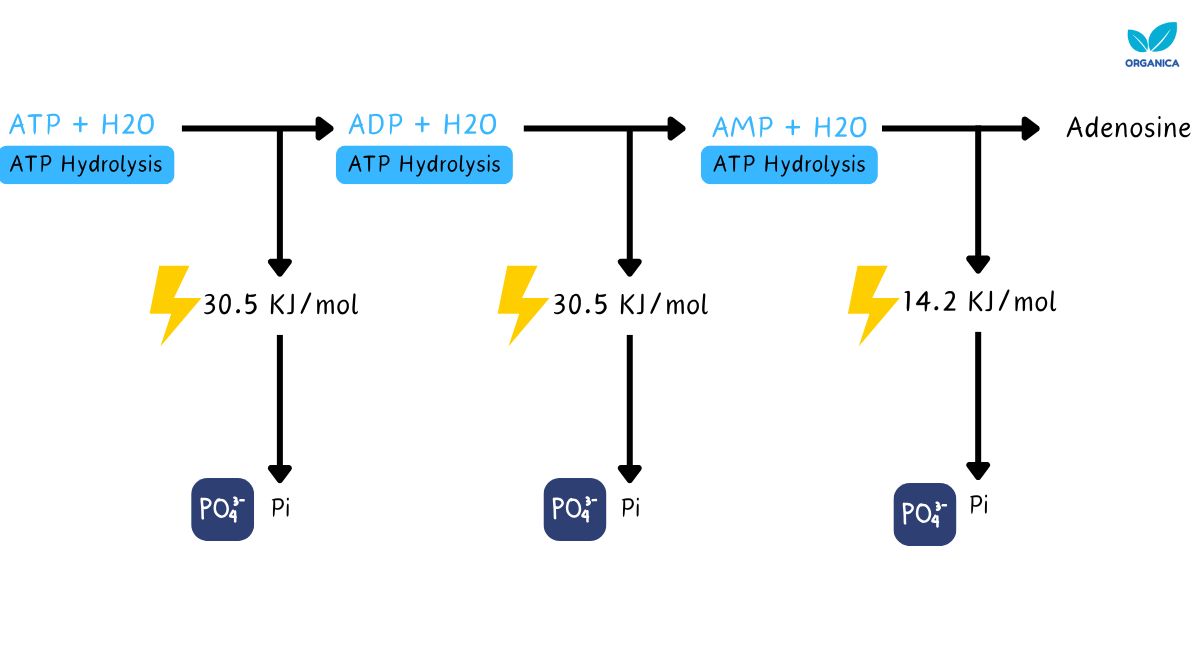
When ATP reacts with water in a process called “ATP Hydrolysis”, it releases the energy stored in the covalent bonds between phosphate groups:
| Hydrolysis of molecules | Amount of energy released |
| Hydrolysis of ATP (3 Phosphate groups) | 30.5 KJ/mol of energy released |
| Hydrolysis of ADP (2 phosphate groups) | 30.5 KJ/mol of energy released |
| Hydrolysis of AMP (1 phosphate group) | 14.2 KJ/mol of energy released |
The importance of ATP is centered around it being the perfect energy currency, and that is for several reasons:
1. ATP Hydrolysis happens quickly and instantly, providing a quick surge of energy when needed in any cell of the body
2. The hydrolysis of one molecule of ATP is enough to supply the perfect amount of energy needed without it being wasted.
3. At an optimum pH range, ATP remains relatively stabls a special enzyme called ATPase is present